

Article: Early October Buck Movement: How to Position Yourself for Success in the Whitetail Woods
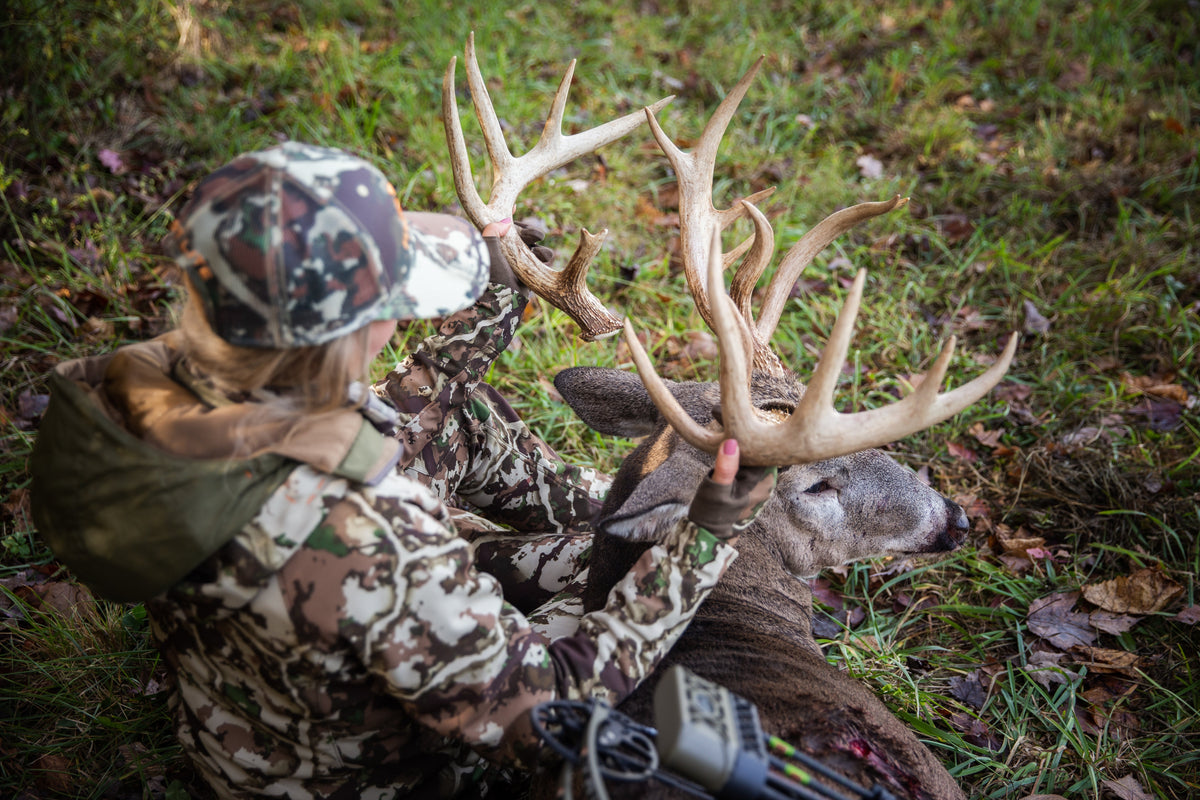
Early October Buck Movement: How to Position Yourself for Success in the Whitetail Woods
October is when the whitetail woods start to change.
Summer patterns begin to fade. Bucks that spent much of the summer moving predictably around food and bedding areas start to shift their routines. Bachelor groups break up, daylight movement can increase, and the first signs of the rut begin to appear on the landscape.
But early October isn't the rut.
That's an important distinction.
For hunters who know how to recognize these subtle changes—and reposition accordingly—early October can offer some of the best opportunities of the season.
The key is understanding where bucks want to be, how their behavior is changing, and how to position yourself without blowing up the area you're hunting.
Summer Patterns Are Starting to Break Down
Throughout the summer, mature bucks can be surprisingly predictable.
They may spend their evenings feeding in agricultural fields or food plots before working their way back toward bedding areas. Trail-camera photos often reveal consistent movement patterns, making it tempting to assume those same patterns will carry into October.
They won't.
As daylight shortens and temperatures begin to drop, bucks gradually start shifting their priorities. Bachelor groups begin to break apart, testosterone levels rise, and bucks become increasingly interested in areas frequented by does.
That doesn't mean a mature buck suddenly becomes reckless.
If anything, older bucks can become more difficult to pattern as October progresses.
Instead of relying solely on the patterns you identified in August and September, start looking for fresh sign and changes in movement.
Pay Attention to Fresh Sign
Early October is a great time to start treating fresh sign as a roadmap.
Scrapes and rubs are beginning to show up more consistently, and while a single scrape isn't necessarily enough reason to move a stand, clusters of fresh sign can tell you a lot about how bucks are using the property.
Look for:
- Fresh rubs along travel corridors
- New scrape lines
- Scrapes located near field edges or staging areas
- Heavily used trails connecting bedding and food
- Funnels, pinch points, and terrain features that concentrate movement
- Areas where multiple trails converge
The important word is fresh.
Old sign tells you how deer have used an area.
Fresh sign gives you a clue about how they're using it right now.
That distinction becomes increasingly important once October arrives.
Don't Abandon Food Sources—Find the Staging Areas
Food is still a major factor in early October deer movement.
Agricultural fields, food plots, mast-producing trees, and other dependable food sources can continue to draw deer during evening hours. But hunting directly over the destination food source isn't always your best option.
Instead, look for the areas deer use before they reach the food.
These staging areas can be some of the most valuable places to hunt early in the season.
A buck may leave his bedding area well before dark, but instead of walking straight into a field, he may spend 30 minutes—or several hours—moving through cover, browsing, checking nearby does, or staging just inside the timber.
That's the kind of movement you want to intercept.
A well-placed stand along a travel route between bedding cover and a food source can put you in position to catch a buck while he's still moving during legal shooting hours.
Start Thinking About Does
Early October is also the time to start paying closer attention to doe activity.
As the rut approaches, bucks become increasingly interested in locating and monitoring does. That doesn't necessarily mean you're going to see bucks chasing does through the timber just yet.
Instead, look for areas where does consistently spend time.
Doe bedding areas, feeding areas, and travel corridors can all become important pieces of the puzzle.
If you can identify where does are spending their time, you can often identify where bucks will eventually want to be.
The trick is to get ahead of that movement rather than waiting until the rut is in full swing.
Hunt the Wind, Not Just the Sign
Finding fresh sign is only half the battle.
The best-looking scrape line in the county isn't worth much if your stand placement puts your scent directly into a buck's nose.
Early October bucks can still be extremely sensitive to pressure. One bad encounter can change the way a mature buck uses a particular area—especially if he associates that encounter with human activity.
Before hanging a stand, think about:
Where is the buck likely coming from?
Where is he going?
What wind direction will keep your scent away from those routes?
What happens if the wind shifts?
A good stand location should work with the prevailing wind conditions you're likely to encounter, not force you to hunt a spot regardless of the wind.
Don't Overhunt Your Best Spot
One of the biggest advantages you have in early October is time.
You don't have to hunt every promising location immediately.
If your trail cameras show a mature buck using a particular area, resist the temptation to sit there every evening. The goal isn't simply to hunt a spot as often as possible. It's to hunt it when the conditions give you the highest odds of success.
Save your best locations for the right wind, temperature change, weather system, or movement pattern.
Sometimes the smartest move is leaving a good stand alone.
Think About Access
Stand location gets most of the attention, but access can be just as important.
You can have the perfect setup overlooking a heavily used trail, but if reaching the stand requires walking through bedding cover or crossing the trail you're trying to hunt, you may be doing more harm than good.
Plan your entry and exit routes before you ever climb the tree.
Whenever possible, use terrain, ditches, waterways, field edges, and other natural features to stay concealed while minimizing disturbance.
And remember: the goal isn't just to get into the stand undetected. It's to leave undetected, too.
A mature buck that never knows you were there is much more likely to use the area again.
Be Ready to Adapt
Perhaps the biggest lesson for early October is simple: don't get married to your summer pattern.
The woods are changing, and your strategy should change with them.
Pay attention to fresh sign. Watch where does are moving. Look for staging areas and funnels. Reevaluate your trail-camera data. Adjust your stand locations when the evidence tells you to.
You don't necessarily need to make a dramatic move.
Sometimes shifting a stand 50 yards, changing your access route, or hunting a different wind can be enough to turn a marginal setup into a great one.
Position Yourself for the Month Ahead
Early October isn't about sitting in a tree and hoping the rut shows up.
It's about putting the pieces together.
The bucks are changing their patterns. Fresh sign is appearing. Doe activity is becoming increasingly important. And the conditions that made a particular stand great in September may not make it great in October.
The hunters who recognize those changes—and adjust before the rest of the woods does—can put themselves in a much better position when October movement starts to heat up.
Study the sign. Hunt the wind. Protect your best spots. And position yourself where the deer want to be—not where they were a month ago.
Because in the whitetail woods, the best setup isn't always the one with the most sign.
It's the one that puts you in the right place at the right time, without the deer ever knowing you're there.

Written by Novix Outdoors